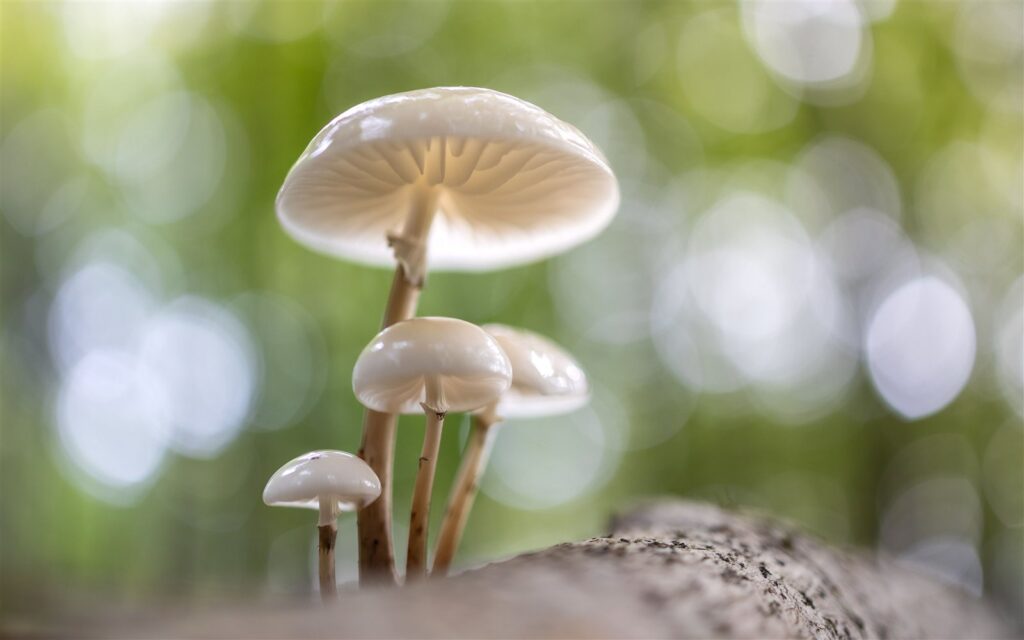
Psilocybin, the active ingredient in “magic mushrooms,” has been in the news a lot. This post explains what psilocybin is, how it is being studied, what the research shows so far, and what the risks are.
It draws mainly on a review and a patient guide published in JAMA in October 2026 (see Sources below).
What is psilocybin?
Psilocybin is a natural chemical found in certain mushrooms. This produces what is called a “psychedelic” experience. People may notice changes in what they see and hear, unusual thoughts, very strong emotions, a feeling of being disconnected from themselves, and sometimes a deep spiritual or mystical feeling.
The effects usually begin about 30 minutes after taking it, are strongest at about 90 minutes, and fade after 4 to 6 hours.
Scientists do not yet know exactly how psilocybin might help depression. The leading ideas are that it changes serotonin signaling, helps the brain form new connections (called neuroplasticity), and shifts how different brain networks communicate.
Is psilocybin legal?
In the United States, psilocybin is a Schedule I controlled substance. As of October 2026, the FDA has not approved it for any medical use. The FDA has given it “breakthrough therapy” status for major depression and treatment-resistant depression. That label speeds up the review process, but it is not an approval. Drug companies are working toward FDA approval, and a decision may come within the next year or so, but nothing is certain.
For now, legal use in the U.S. is limited to clinical trials and to state-licensed programs in Oregon and Colorado, where trained facilitators supervise each session.
What does psilocybin treatment look like?
In research studies, psilocybin is not a pill you take every day at home. Treatment usually involves one or two doses, given along with psychological support in three stages:
- Preparation. You meet with a therapist to talk about your goals and learn what to expect.
- Dosing. You take psilocybin in a calm, supervised setting. One or two trained staff stay with you the whole time for support and safety.
- Integration. Afterward, you meet with a therapist to make sense of the experience.
After a dosing session: someone must drive you home. You should not drive, operate heavy machinery, or be alone for 24 hours.
Does it work?
Depression
This is where the evidence is strongest, but it is still limited. When researchers combined 5 studies with 479 people, psilocybin worked better than a comparison treatment when both groups received the same therapy support. The benefit was moderate in size. However, experts rated the certainty of this evidence as very low.
The largest study so far included 233 adults with treatment-resistant depression (depression that has not improved with other treatments). Each person got one dose of 1 mg (almost no effect), 10 mg, or 25 mg. After 3 weeks, the 25 mg group improved clearly more than the 1 mg group. The 10 mg group did not. By 12 weeks, though, the difference between groups was no longer meaningful. In other words, the benefit may fade over time.
Quitting smoking
In one study of 82 adults, 41% of those who received psilocybin were still not smoking after 6 months, compared with 10% of those who used a nicotine patch. That is promising, but everyone in the study knew which treatment they received, so larger and better-controlled studies are needed.
Alcohol use
Three studies with 165 people found that more people stopped drinking with psilocybin (about 47%) than without it (about 25%). However, this difference could have been due to chance.
Microdosing
Taking small, regular doses that do not cause a “trip” is popular, but no high-quality studies have tested whether it helps any condition.
Why the evidence is hard to judge
Psilocybin has strong, obvious effects. In studies, more than 80% of people correctly guessed whether they got psilocybin or a placebo. People who know they got the real drug may expect to feel better, and that hope alone can improve symptoms. People who realize they got the placebo may feel disappointed and actually feel worse. Both effects can make psilocybin look more powerful than it really is.
There are other open questions too. Researchers do not yet know how much therapy is needed, how many doses work best, or whether people need repeat doses to stay well.
What are the risks?
Common side effects in clinical trials include headache, nausea, anxiety, feeling disconnected, changes in perception, and a temporary rise in heart rate and blood pressure. These usually happen during the session and go away within a day or two.
Suicidal thoughts
Some people have worried that psilocybin might increase suicidal thinking. A review of 9 studies with 593 people found the opposite: psilocybin slightly reduced suicidal thoughts, and no suicide attempts or deaths were reported.
Serious but rare effects
Serious but rare effects include seizures, mania, and psychosis (losing touch with reality). These have rarely shown up in recent trials, but those trials usually exclude anyone with a personal or family history of bipolar disorder or psychotic disorders. People with these histories may face higher risk.
Hallucinogen persisting perception disorder (HPPD)
Some people who use psilocybin recreationally develop visual changes that continue or return long after the drug has worn off. No one knows yet how common this is. HPPD is a condition I evaluate and treat in my practice. For more on who is at risk, see Predictors of HPPD Following Psychedelic Use.
Recreational use
About 11 million U.S. adults used psilocybin in the past year. Mushrooms bought outside a licensed program vary in strength, may not be what they claim to be, and are taken without medical screening or support. Psilocybin can also interact with some medications.
The bottom line
Psilocybin is not FDA-approved. Early research suggests that, combined with psychological support, it may help some people with major depression, treatment-resistant depression, and smoking. But the evidence is still low in quality, benefits may not last, and it is not safe for everyone.
If you are curious about psilocybin, please don’t try it on your own. Talk with your psychiatrist about your history, your current medications, whether a clinical trial might be right for you, and the proven treatments available today.
This article is for general education and is not medical advice for any individual.
Get in Touch With Dr. Steven Locke
📞 Phone: (508) 343-0001
🔒 Secure Fax: (508) 213-3776
✉️ Email: office@drstevenlocke.com
🖥️ Telepsychiatry appointments are available for both in-state and out-of-state patients.
Sources
- Rosenblat JD, Husain MI. Psilocybin. JAMA. 2026;336(13):1165-1166. doi:10.1001/jama.2026.11874 (opens in a new window)
- Walter KL. What Is Psilocybin? JAMA Patient Page. JAMA. 2026;336(13):1182. doi:10.1001/jama.2026.18064 (opens in a new window)